Imagine walking through the door after a long day to the aroma of a delicious, home-cooked meal, ready and waiting. This dream is a reality for countless households thanks to the humble slow cooker. But for those feeding a crowd, managing a busy family, or simply loving the convenience of batch cooking, a standard size often falls short. This guide will explore the world of large slow cookers, unveiling their benefits, types, and crucial factors to consider when selecting the ideal one for your culinary adventures.
What is a Large Slow Cooker?
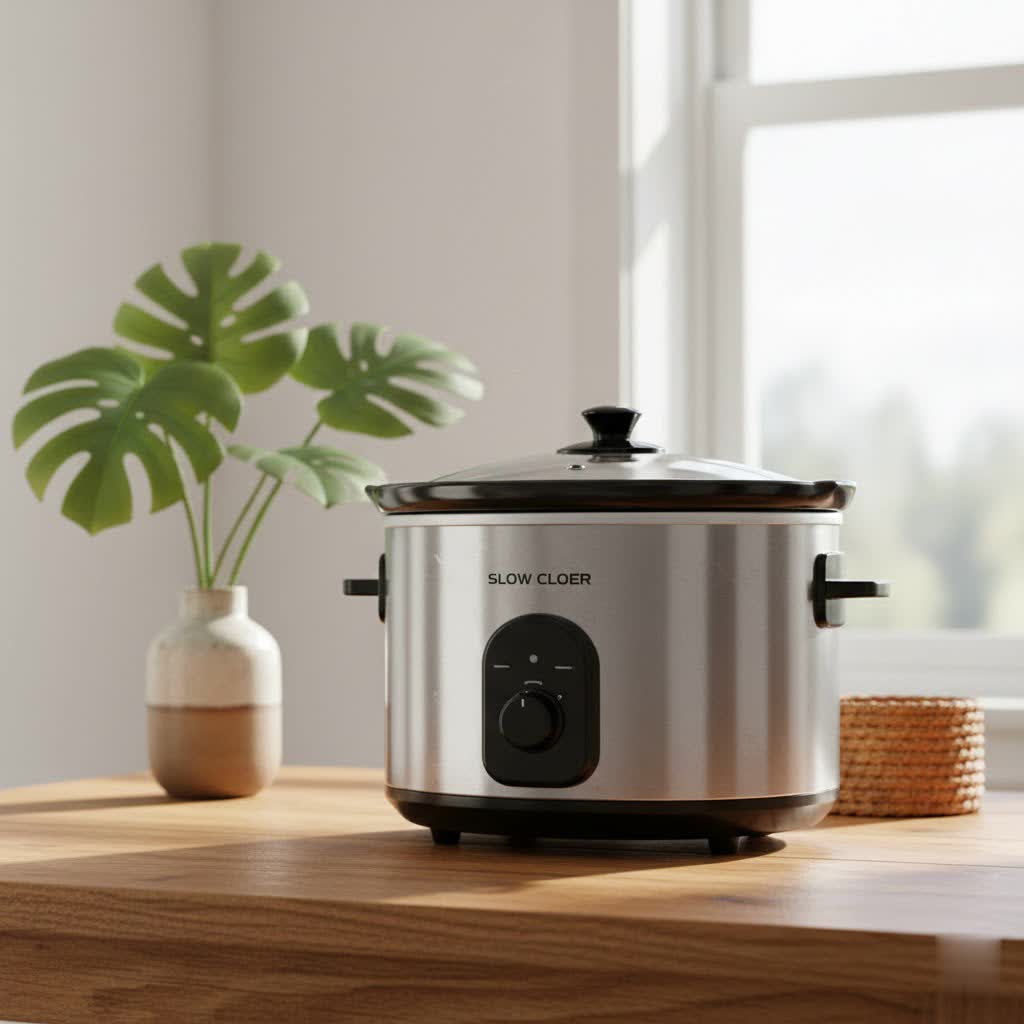
A slow cooker is an electric countertop appliance that cooks food at a low, consistent temperature over several hours. It typically consists of a heated housing unit, a removable inner pot (often ceramic or stoneware), and a lid. The term “large slow cooker” generally refers to models with a capacity of 5 quarts and up, often extending to 7, 8, or even 10 quarts. These generous sizes are designed to accommodate substantial meals, ensuring ample portions for larger families, gatherings, or extensive meal preparation. They are particularly well-suited for recipes that involve big cuts of meat, whole poultry, or large batches of soups and stews.
Why Choose a Large Slow Cooker?
Opting for a large slow cooker brings a host of advantages to any kitchen, transforming mealtime from a chore into a seamless experience.
One of the primary benefits is the significant time and effort savings. With a large capacity, you can prepare ingredients in the morning, set the appliance, and return hours later to a fully cooked meal, eliminating last-minute dinner stress. This “dump and go” convenience is invaluable for busy individuals and families.
Batch cooking and meal preparation become effortless. A large slow cooker allows you to cook substantial quantities of food at once, providing leftovers for lunches, additional dinners, or freezing for future use. This strategy not only saves time during the week but also helps reduce reliance on takeout.
Large slow cookers are also incredibly cost-effective. They excel at tenderizing less expensive cuts of meat, transforming them into succulent dishes. Furthermore, they facilitate bulking out meals with economical ingredients like legumes, beans, and vegetables, stretching your budget further. You can even use them to make your own nutritious and additive-free broths and stocks from leftover bones and vegetable scraps.
The low and slow cooking method contributes to enhanced flavor and nutrition. Flavors meld beautifully over extended cooking periods, resulting in deeply satisfying and aromatic dishes. This method also helps to retain nutrients, and many slow cooker recipes require minimal added fats, making for healthier meals.
For those who frequently entertain, a large slow cooker is an indispensable tool. It can cook entire roasts, sizable batches of chili, or keep hot dips and appetizers warm for extended periods, freeing up your oven and stovetop for other preparations. Many models are also portable, making them ideal for potlucks and gatherings.
Finally, slow cookers are remarkably energy-efficient. Despite long cooking times, they use less electricity than a conventional oven, making them an eco-friendly and cost-effective choice for daily cooking.
Types of Large Slow Cookers
Large slow cookers come with various functionalities, catering to different cooking styles and preferences. Understanding these types helps in choosing the best fit for your home.
Manual Large Slow Cookers are the most straightforward. They typically feature basic settings such as “Low,” “High,” and “Warm,” controlled by a simple dial. These models are generally more budget-friendly and are excellent for those who appreciate simplicity and don’t mind monitoring the cooking process or being home to switch off the appliance.
Programmable Large Slow Cookers offer enhanced convenience with digital controls and timers. You can set a specific cooking time, and once complete, the cooker will automatically switch to a “Keep Warm” setting, preventing overcooking and ensuring your meal is ready when you are. This feature is particularly beneficial for busy schedules, allowing for true “set-it-and-forget-it” cooking.
Multi-Cooker Large Slow Cookers are the most versatile. These appliances combine slow cooking with other functions like searing, sautéing, steaming, or even pressure cooking, all within the same pot. This multi-functionality allows you to brown meat directly in the slow cooker before slow cooking, enhancing flavor and reducing cleanup by eliminating the need for extra pans. While generally higher in price, they offer immense flexibility for diverse culinary needs.
Comparing Large Slow Cooker Types
Here’s a comparison to help highlight the differences between the common types of large slow cookers:
| Feature | Manual Slow Cooker | Programmable Slow Cooker | Multi-Cooker Slow Cooker |
|---|---|---|---|
| Price Range | Budget-friendly | Mid-range | Higher-end |
| Capacity | 5-10 Quarts | 5-10 Quarts | 5-10 Quarts |
| Core Functions | Low, High, Warm | Timer, Auto-Warm, Low, High | Sear/Sauté, Steam, Pressure Cook (varied), Low, High, Warm |
| Ease of Use | Simple dial, requires manual switch-off | Digital controls, set-and-forget convenience | Advanced controls, versatile but may have a learning curve |
| Best For | Basic recipes, users present during cooking, budget-conscious | Busy individuals, consistent results, preventing overcooking | Advanced cooking techniques, one-pot meal enthusiasts, space-saving |
Essential Factors When Buying a Large Slow Cooker
Choosing the right large slow cooker involves weighing several key considerations to ensure it meets your specific needs.
Capacity
|
Our Picks for the Best Slow Cooker in 2026
As an Amazon Associate I earn from qualifying purchases.
|
||
| Num | Product | Action |
|---|---|---|
| 1 | Hamilton Beach Slow Cooker, Extra Large 10 Quart, Stay or Go Portable With Lid Lock, Dishwasher Safe Crock, Black (33195) |

|
| 2 | Ninja® 12-in-1 PossibleCooker™ PLUS - 8.5-qt - Sous Vide & Proof Multi-Cooker - Slow Cooker, Dutch Oven & More - Glass Lid & Integrated Spoon - Nonstick - Oven Safe Pot to 500°F - Black - MC1010 |
|
| 3 | Ninja MC1101 Foodi Everyday Possible Cooker Pro, 8-in-1 Versatility, One-Pot Faster Cooking Replaces 10 Tools, Family-Sized Capacity with Adjustable Temp Control, 6.5 quarts, Midnight Blue |
|
| 4 | Crock-Pot 6 Quart Cook & Carry Programmable Slow Cooker with Digital Timer Stainless Steel (CPSCVC60LL-S) pack of 1 |
|
| 5 | Crockpot Manual 7-Quart Slow Cooker Turquoise |
|
| 6 | Crock-Pot 7 Quart Oval Manual Slow Cooker, Stainless Steel (SCV700-S-BR), Versatile Cookware for Large Families or Entertaining |
|
| 7 | 4-Quart Classic Slow Cooker – Programmable Small Crock Pot for Stews, Soups, Meats & Easy Meals, Removable Stoneware & Dishwasher-Safe Lid, Black |
|
| 8 | Crockpot SCV700-CH-BR Slow Cooker 7 quarts Charcoal |
|
| 9 | Crock-Pot Large 8-Quart Programmable Slow Cooker with Auto Warm Setting Black Stainless Steel |
|
| 10 | Crock-Pot 6 Quart Programmable Slow Cooker with Timer and Auto Food Warmer Setting, Stainless Steel |
|
The most crucial factor is undoubtedly capacity. To determine the ideal size, consider your household size, your frequency of entertaining, and your desire for leftovers. A 5 to 6-quart slow cooker is generally suitable for families of 3-5 people or couples who enjoy having leftovers. For larger families of 6 or more, frequent entertainers, or those dedicated to extensive batch cooking, a 7, 8, or even 10-quart model would be a more appropriate choice. Remember, slow cookers perform best when filled between one-half and three-quarters full; under-filling can lead to overcooking, while over-filling can extend cooking times and potentially create a mess.
Material
The material of the slow cooker’s insert pot affects both performance and durability.
Ceramic or stoneware inserts are traditional and excellent at retaining heat evenly. They are often aesthetically pleasing enough to go directly from the cooker to the serving table. However, they are heavier and more fragile than metal inserts, susceptible to cracking from thermal shock (e.g., placing a cold pot on a hot base or vice versa, or adding cold liquid to a hot pot).
Metal inserts, typically made of stainless steel or aluminum, are lighter and more durable. Some metal inserts are stovetop-safe, allowing you to sear ingredients directly before slow cooking, which adds depth of flavor and reduces the number of dishes to clean. While lighter, they might not always distribute heat as uniformly as ceramic.
Features and Functions
Beyond basic “Low,” “High,” and “Warm” settings, modern large slow cookers offer a range of features:
Programmable timers are a game-changer for convenience, allowing you to set a cooking duration after which the appliance automatically switches to “Keep Warm.”
An auto-keep warm function prevents food from overcooking and keeps it at a safe serving temperature for several hours.
Some models include a temperature probe, perfect for precisely cooking large cuts of meat to a desired internal temperature.
Lid locks and sturdy carry handles are essential if you plan to transport your slow cooker for potlucks or gatherings.
Multi-cooking capabilities, as seen in multi-cooker models, can include sear/sauté, steam, or even pressure cook functions, providing incredible versatility from a single appliance.
For the tech-savvy, Wi-Fi connectivity allows remote control and monitoring via a smartphone app, offering unparalleled flexibility for busy lifestyles.
Shape
The shape of your large slow cooker impacts what you can cook most effectively:
Oval-shaped slow cookers are ideal for larger, elongated items like whole chickens, substantial roasts, ribs, or larger cuts of meat.
Round-shaped models are excellent for soups, stews, chilis, and dips.
Less common, but some rectangular slow cookers are available, specifically designed for dishes like lasagna or casseroles.
Brand and Price
Numerous reputable brands offer large slow cookers, including Crock-Pot, Hamilton Beach, Cuisinart, Instant, and GreenLife. Prices can vary significantly based on capacity, features, and brand prestige. Basic manual models are often the most affordable, while programmable multi-cookers with advanced features will command a higher price. Consider your budget alongside your desired features to find a slow cooker that offers the best value for your investment.
Top-Rated Large Slow Cookers for Every Need
With a wide array of options available, selecting a highly-regarded large slow cooker can make a significant difference in your cooking experience. Many brands offer models that consistently receive high praise for their performance and features.
For instance, robust programmable models are often lauded as “the workhorse” of the kitchen. These typically boast generous 7 or 8-quart capacities, perfect for feeding large gatherings or preparing batch meals. Their digital timers and automatic “keep warm” settings ensure dishes are cooked to perfection without constant supervision, making them ideal for busy households.
If versatility is a priority, consider a multi-cooker slow cooker, often hailed as “the versatile chef.” These innovative appliances frequently include functions like searing or sautéing directly in the insert. This feature is particularly valuable for building rich flavors by browning meats and vegetables before the slow cooking process begins, all in one pot. Capacities commonly range from 6 to 7.5 quarts, providing ample space for complex, one-pot meals.
For those who embrace technology, “the smart choice” models often come with advanced features such as integrated temperature probes for precise meat cooking or even Wi-Fi connectivity, allowing remote control and monitoring via a smartphone. These usually come in 6 to 8-quart sizes, blending modern convenience with traditional slow cooking benefits.
Finally, for budget-conscious cooks, there are excellent “budget-friendly giant” options. These manual large slow cookers, often in 6 or 7-quart sizes, provide reliable performance for basic slow cooking tasks without the added cost of advanced electronics. While simpler, they still deliver tender, flavorful results and are a fantastic entry point into large-capacity slow cooking.
Tips for Using and Maintaining Your Large Slow Cooker
To get the most out of your large slow cooker and ensure its longevity, follow these practical tips:
Always strive to fill your slow cooker between one-half and three-quarters full. This optimal range ensures even cooking and prevents food from either drying out or taking excessively long to cook. When prepping ingredients, larger cuts of meat and denser vegetables generally go at the bottom, closer to the heat source, with quicker-cooking ingredients layered on top.
For safe usage, always thaw frozen meat or poultry completely before placing it in the slow cooker, unless your specific model has a dedicated “cook from frozen” setting. Place the slow cooker on a flat, stable, heat-resistant surface, away from walls or cabinets, to allow for proper heat dissipation. Avoid lifting the lid unnecessarily during cooking, as each time you do, heat escapes, and the cooking time will be extended by approximately 20-30 minutes.
Cleaning is typically straightforward. Most removable inserts and lids are dishwasher-safe. For stubborn residue, soak the insert with warm, soapy water immediately after serving. Using slow cooker liners can also simplify cleanup significantly, especially for sticky or saucy dishes. Always ensure the appliance is unplugged and completely cooled before cleaning the base unit with a damp cloth.
Safety Reminders for Slow Cooker Use
While slow cookers are designed for unattended cooking, it’s vital to observe a few safety guidelines:
Ensure your slow cooker is in good condition, free from frayed cords or damaged components, before each use. Never operate a damaged appliance.
Maintain proper food safety temperatures. Slow cookers cook at low temperatures, so it’s crucial that food reaches a safe internal temperature quickly to prevent bacterial growth. Always start with thawed ingredients (unless the recipe or model specifically allows frozen) and ensure the food remains above 140°F (60°C) during the “keep warm” cycle. When reheating leftovers, always use a stove or microwave to bring them to 165°F (74°C) rapidly, rather than relying on the slow cooker.
Place your slow cooker on a sturdy, level surface away from the edge of the counter and out of reach of children and pets. Do not immerse the electrical base in water. Always unplug the appliance from the wall outlet when not in use and before cleaning. By following these simple precautions, you can enjoy the many benefits of your large slow cooker with complete peace of mind.
Conclusion
The large slow cooker stands as a beacon of culinary convenience, offering generous capacity and effortless meal preparation for busy families, avid entertainers, and anyone passionate about delicious, home-cooked food. From tenderizing tough cuts of meat to enabling extensive batch cooking, its benefits extend far beyond simply saving time. With a variety of types, materials, and advanced features available, finding a model perfectly suited to your kitchen and lifestyle is easier than ever. Embrace the ease and flavor a large slow cooker brings, and transform your everyday cooking into a consistently delightful experience. What mouth-watering, large-batch meal will you create first?
Frequently Asked Questions
What is the largest slow cooker size available?
Currently, slow cookers are available in capacities up to 10 quarts, making them ideal for very large families, major events, or preparing substantial amounts of food for freezing and meal prepping.
Can you put frozen meat in a large slow cooker?
Generally, it is not recommended to put frozen meat directly into a slow cooker due to food safety concerns, as it can take too long for the meat to reach a safe cooking temperature. Always thaw meat completely before adding it, unless your specific slow cooker model explicitly states it has a safe “cook from frozen” function.
How much liquid should be in a slow cooker?
Slow cookers excel at retaining moisture, so recipes typically require less liquid than traditional stovetop or oven cooking. Generally, fill your slow cooker between one-half and three-quarters full with ingredients and liquid for optimal cooking results and to prevent drying out or overcooking.
Are large slow cookers energy efficient?
Yes, slow cookers are generally very energy efficient. They operate at lower wattages compared to conventional ovens, making them a cost-effective choice for long cooking durations, even when preparing large meals.
Can a large slow cooker overcook food?
Yes, a slow cooker can overcook food, especially if left on the “High” or “Low” setting for too long after the food is done. Programmable models with automatic “Keep Warm” settings are designed to mitigate this by switching to a lower temperature once the set cooking time is complete.
