Tired of juggling multiple pots and pans for a simple meal, or finding yourself with too many leftovers from a standard-sized appliance? The Mini Slow Cooker might just be the kitchen hero you never knew you needed. Perfect for solo diners, couples, small families, or even just for keeping dips warm at a party, these compact powerhouses offer all the convenience of their larger counterparts in a space-saving package. If you’re looking to simplify your cooking routine without sacrificing flavor or nutrition, dive in with us as we explore everything there is to know about mini slow cookers and help you find your perfect match.
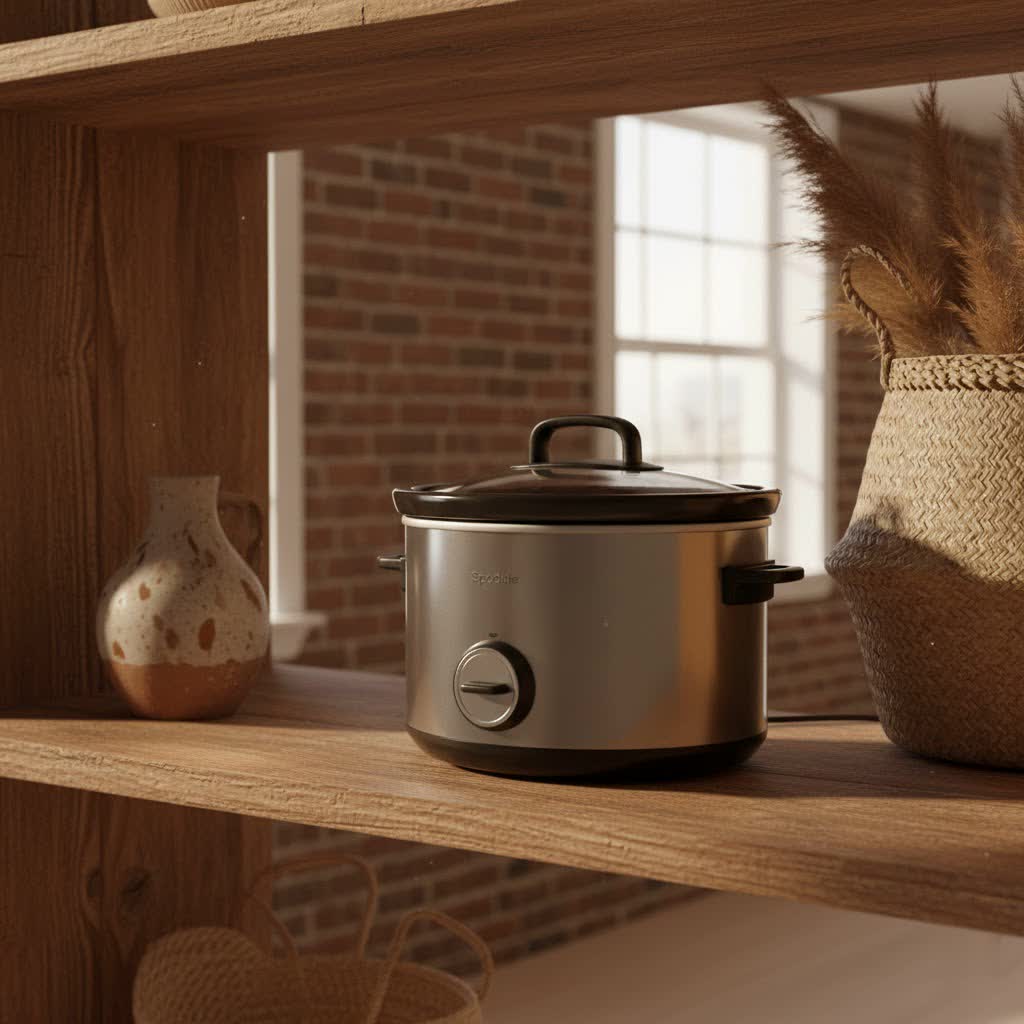
What is a Slow Cooker?
A slow cooker, often called a Crock-Pot (a popular brand name), is an electric cooking appliance that simmers food at a low temperature over an extended period. This gentle, consistent heat cooks food evenly and tenderizes tougher cuts of meat, allowing flavors to meld beautifully. Its primary purpose is to provide a “set it and forget it” cooking experience, making it ideal for busy individuals.
The history of the slow cooker dates back to the early 20th century, with the first commercially successful version, the Naxon Beanery, appearing in the 1950s. It revolutionized home cooking by enabling users to prepare hearty meals with minimal supervision. Over decades, it evolved from a single-purpose bean cooker to a versatile kitchen staple, capable of making everything from stews to desserts.
Slow cookers typically consist of a few key components: an outer housing with a heating element, a removable ceramic or stoneware insert where the food cooks, and a lid, usually made of glass to monitor progress. The heating element gently warms the insert, slowly bringing the food to temperature and maintaining it for hours. The tight-fitting lid traps moisture and heat, ensuring food remains tender and flavorful.
Why Use a Slow Cooker?
Utilizing a slow cooker brings a wealth of benefits to the modern kitchen, making it a favorite for many home cooks. Its core appeal lies in its ability to deliver delicious, home-cooked meals with minimal effort and supervision.
One of the most significant advantages is the considerable time and effort saved on cooking. You can simply add your ingredients in the morning, set the cooking time, and return to a perfectly cooked meal in the evening. This frees up your day, allowing you to focus on other tasks or enjoy more leisure time without the constant need to monitor a stove or oven.
Slow cooking excels at retaining the nutritional value and enhancing the natural flavors of food. The low, slow heat prevents nutrients from breaking down, while the extended cooking time allows herbs, spices, and ingredients to infuse deeply, resulting in richer, more complex tastes. Tougher and more affordable cuts of meat become incredibly tender and succulent, making them a joy to eat.
The versatility of a slow cooker is another major draw. While often associated with stews and roasts, these appliances can prepare a diverse range of dishes, including soups, chilis, casseroles, pulled pork, hot dips, desserts, and even baked goods. From hearty comfort food to lighter, healthier options, a slow cooker can handle it all.
Beyond convenience and flavor, slow cookers are also inherently safe and simple to use. They operate at lower temperatures than ovens or stovetops, reducing the risk of burns. Many models feature automatic shut-off or keep-warm functions, providing peace of mind. Their straightforward controls make them accessible even for novice cooks, ensuring a consistent and pleasant cooking experience.
Types of Slow Cookers
While the fundamental principle remains the same, slow cookers come in various types, each offering distinct features to suit different preferences and lifestyles. Understanding these categories can help you determine which model best fits your needs.
Manual Slow Cookers are the most basic and often the most affordable option. They typically feature a simple dial with settings like “Low,” “High,” and “Warm.” You manually turn the unit on and off, making them straightforward to operate. They are perfect for those who appreciate simplicity and don’t require advanced programming.
Programmable Slow Cookers elevate the convenience factor with digital controls. These models allow you to set specific cooking times, after which they often automatically switch to a “Keep Warm” setting. This feature is invaluable for busy individuals who might not be home precisely when cooking finishes, preventing meals from overcooking or getting cold. Some advanced programmable models even offer delayed start times.
Multi-Cookers are versatile appliances that combine the functions of a slow cooker with other cooking methods, such as pressure cooking, rice cooking, sautéing, steaming, and even yogurt making. While not exclusively slow cookers, many popular multi-cookers include a slow cook function. They are excellent for those with limited kitchen space who want one appliance to do it all.
Mini Slow Cookers, which are our focus here, are specifically designed for smaller portions, typically ranging from 1.5 to 3 quarts (1.4 to 2.8 liters). They are ideal for individuals, couples, or preparing side dishes, dips, and desserts. Their compact size makes them perfect for small kitchens, dorm rooms, or RVs, and they are often more portable than their larger counterparts. Despite their size, they deliver the same slow-cooked goodness.
Comparison Table: Slow Cooker Types
| Feature | Manual Slow Cooker | Programmable Slow Cooker | Multi-Cooker (with Slow Cook) | Mini Slow Cooker |
|---|---|---|---|---|
| Price Range | Low to Mid | Mid to High | Mid to High | Low to Mid |
| Capacity | Standard (4-8+ quarts) | Standard (4-8+ quarts) | Standard (6-8+ quarts) | Small (1.5-3 quarts) |
| Key Functions | Low, High, Warm | Low, High, Warm, Timer, Auto-Keep Warm | Pressure Cook, Sauté, Steam, Slow Cook, etc. | Low, High, Warm (often manual) |
| Material | Ceramic/Stoneware insert, stainless steel/plastic exterior | Ceramic/Stoneware insert, stainless steel/plastic exterior | Stainless steel inner pot, stainless steel/plastic exterior | Ceramic/Stoneware insert, plastic/stainless steel exterior |
| Pros | Simple, reliable, affordable | Convenient, flexible scheduling, precise control | Extremely versatile, space-saving (many functions in one) | Compact, portable, ideal for small portions, less energy for small meals |
| Cons | Requires manual monitoring, no auto-off | Higher cost, more complex interface for some | Can be overwhelming, higher upfront cost, may not excel at all functions | Limited capacity, not suitable for large family meals |
Key Factors When Choosing a Mini Slow Cooker (Buying Guide)
Choosing the perfect mini slow cooker involves considering several factors to ensure it aligns with your cooking habits and lifestyle. Unlike larger models, the “mini” aspect introduces unique considerations that are crucial for satisfaction.
Capacity
This is arguably the most critical factor for a mini slow cooker. Determining the number of people you typically cook for is essential.
- For single individuals or preparing individual portions for meal prep, a 1.5-quart (approx. 1.4 liters) model is often ideal. It’s perfect for a single serving of soup, stew, or a dip.
- For couples or small serving sizes for one, a 2-quart (approx. 1.9 liters) slow cooker offers a bit more flexibility without taking up much extra space.
- If you occasionally cook for three people, want leftovers for one, or plan to use it for appetizers/dips at gatherings, a 3-quart (approx. 2.8 liters) mini slow cooker strikes a great balance. It’s still compact but provides more versatility.
Remember that a slow cooker should be filled at least halfway, but no more than two-thirds full, for optimal cooking.
|
Our Picks for the Best Slow Cooker in 2026
As an Amazon Associate I earn from qualifying purchases.
|
||
| Num | Product | Action |
|---|---|---|
| 1 | 4-Quart Classic Slow Cooker – Programmable Small Crock Pot for Stews, Soups, Meats & Easy Meals, Removable Stoneware & Dishwasher-Safe Lid, Black |

|
| 2 | Crock-Pot 6 Quart Cook & Carry Programmable Slow Cooker with Digital Timer Stainless Steel (CPSCVC60LL-S) pack of 1 |
|
| 3 | Crockpot SCV700-CH-BR Slow Cooker 7 quarts Charcoal |
|
| 4 | Crock-Pot 7 Quart Oval Manual Slow Cooker, Stainless Steel (SCV700-S-BR), Versatile Cookware for Large Families or Entertaining |
|
| 5 | Crock-Pot Large 8-Quart Programmable Slow Cooker with Auto Warm Setting Black Stainless Steel |
|
| 6 | Hamilton Beach Slow Cooker, Extra Large 10 Quart, Stay or Go Portable With Lid Lock, Dishwasher Safe Crock, Black (33195) |
|
| 7 | Ninja MC1101 Foodi Everyday Possible Cooker Pro, 8-in-1 Versatility, One-Pot Faster Cooking Replaces 10 Tools, Family-Sized Capacity with Adjustable Temp Control, 6.5 quarts, Midnight Blue |
|
| 8 | Crock-Pot 6 Quart Programmable Slow Cooker with Timer and Auto Food Warmer Setting, Stainless Steel |
|
| 9 | Crockpot Manual 7-Quart Slow Cooker Turquoise |
|
| 10 | Ninja® 12-in-1 PossibleCooker™ PLUS - 8.5-qt - Sous Vide & Proof Multi-Cooker - Slow Cooker, Dutch Oven & More - Glass Lid & Integrated Spoon - Nonstick - Oven Safe Pot to 500°F - Black - MC1010 |
|
Material
The materials used in a mini slow cooker affect its durability, heat distribution, and ease of cleaning.
- Ceramic or stoneware inserts are the most common. They distribute heat very evenly, preventing hot spots and ensuring food cooks thoroughly. They are also non-reactive, easy to clean, and often oven-safe. However, they can be fragile and heavy.
- Some smaller slow cookers might feature metal (e.g., aluminum with a non-stick coating) inserts. These are lighter and more durable, but heat distribution might not be as uniform as ceramic.
- The exterior casing is typically stainless steel or plastic. Stainless steel offers a sleek, modern look and is durable, while plastic can make the unit lighter and more affordable. Always ensure the materials are food-grade and free from harmful chemicals.
Functions
Even mini slow cookers offer a range of functions, from basic to slightly more advanced.
- Basic functions usually include “Low,” “High,” and “Warm” settings. “Low” cooks slower and is great for tenderizing, “High” cooks faster, and “Warm” keeps food at a serving temperature without further cooking.
- Advanced features in some mini models might include a basic timer (though less common than in larger programmable units) or an auto-shutoff feature for safety.
- For a mini slow cooker, often simplicity is key. Decide if you need precise timing capabilities or if a manual “set and forget” approach is sufficient for your specific needs. If you primarily want it for dips or small side dishes, a basic manual model is often perfect.
Brand
While mini slow cookers are generally simpler appliances, opting for a reputable brand can offer peace of mind regarding quality, safety, and customer support.
- Crock-Pot is the original and most recognized name, offering a range of reliable mini slow cookers.
- Hamilton Beach is another well-established brand known for its dependable kitchen appliances, often at competitive prices.
- Proctor Silex offers budget-friendly options that are straightforward and functional.
- Dash provides stylish, compact appliances that are popular for small kitchens and dorms.
Researching brand reviews can help you gauge product reliability and customer satisfaction.
Price
Mini slow cookers are generally more affordable than their larger counterparts, but prices can vary based on brand, features, and materials.
- You can find basic 1.5-quart models for as little as $20-$30.
- Mid-range 2-3 quart models with slightly better features or design might cost $30-$50.
- High-end or multi-function compact units could exceed $50, though this is less common for dedicated mini slow cookers.
Determine your budget and prioritize the features most important to you. Sometimes, a slightly higher investment in a well-reviewed model from a trusted brand can offer better long-term value.
Top Mini Slow Cookers Favored by Home Cooks
The market for mini slow cookers is robust, with several models consistently earning high marks for performance, design, and user satisfaction. Here’s a look at some of the top choices and what makes them stand out:
-
Crock-Pot 2-Quart Round Manual Slow Cooker: This classic model from the pioneering brand is a perennial favorite for its simplicity and reliability. Its manual high/low/warm settings are straightforward, making it incredibly easy to use. The removable stoneware insert and glass lid are dishwasher-safe, ensuring effortless cleanup. It’s a fantastic entry-level option for singles or couples seeking fuss-free slow cooking.
-
Hamilton Beach 1.5-Quart Slow Cooker: Known for its compact design and affordability, the Hamilton Beach 1.5-quart model is perfect for personal-sized meals, dips, or sauces. It features a simple knob with warm, low, and high settings. Users praise its consistent cooking and durability, making it an excellent choice for dorm rooms or small apartments where space is at a premium.
-
Dash Mini Maker Slow Cooker (0.5 Quart): While exceptionally small (more of a food warmer than a true slow cooker for main meals), the Dash Mini Maker is incredibly popular for individual portions of oatmeal, soup, or keeping dips perfectly warm. Its adorable, retro design comes in various colors, making it a stylish addition to any countertop. It’s ideal for those who need a truly tiny appliance for very specific, small-scale tasks.
-
Proctor Silex 1.5-Quart Slow Cooker: This model offers exceptional value and performance for its price point. It’s a no-frills, reliable option for individuals or preparing side dishes. With basic high, low, and warm settings, it gets the job done without any complications. It’s often recommended for those on a tight budget who still want the convenience of a mini slow cooker.
These models consistently receive positive feedback for their ease of use, efficient cooking, and durability. When comparing them, consider your specific capacity needs, preferred level of automation, and budget to find the best fit.
Tips for Using and Maintaining Your Mini Slow Cooker
Getting the most out of your mini slow cooker involves a few simple tips for usage and regular maintenance. These practices ensure delicious meals and prolong the life of your appliance.
When first using your mini slow cooker, always wash the ceramic insert and lid thoroughly before placing food inside. While preheating isn’t usually necessary, some chefs recommend a brief preheat on high for about 20 minutes if you’re concerned about maintaining temperature. Always fill your slow cooker at least halfway, but no more than two-thirds full, for optimal cooking. Overfilling can lead to uneven cooking or boil-overs, while underfilling might dry out food or cook too quickly.
For delicious meals, remember that the lid is your best friend. Avoid lifting it frequently, as each peek can drop the internal temperature by 10-15 degrees Fahrenheit, adding significant time to your cooking process. When converting recipes, note that mini slow cookers generally require less liquid than stovetop cooking, as very little moisture evaporates. Root vegetables and tougher meats should be placed at the bottom, closest to the heat source, for best results.
Cleaning and maintaining your mini slow cooker is straightforward. After use, allow the insert to cool completely before washing to prevent thermal shock, which can crack the stoneware. Most ceramic inserts and glass lids are dishwasher-safe for convenience. For stubborn food residue, a soak in warm, soapy water usually does the trick. Avoid abrasive scrubbers that could scratch the surface. The exterior unit can be wiped clean with a damp cloth; never immerse the electrical base in water. Proper care will keep your mini slow cooker performing optimally for years.
Essential Safety Considerations for Your Mini Slow Cooker
While mini slow cookers are generally very safe kitchen appliances, adhering to certain precautions is crucial for preventing accidents and ensuring reliable operation. Awareness of these safety guidelines can help you enjoy the convenience of slow cooking without any worries.
Always inspect your mini slow cooker thoroughly before each use. Check the power cord for any fraying, cuts, or exposed wires. Ensure the ceramic insert is free from cracks or chips, as these can worsen with heat and potentially lead to breakage. If you notice any damage, discontinue use and replace the affected component or the entire unit.
It is critical never to use the slow cooker if it is damaged or malfunctioning. Unusual smells, excessive smoke, or strange noises during operation are clear indicators of a problem. Immediately unplug the unit and contact the manufacturer or a qualified technician for advice. Attempting to repair electrical appliances without expertise can be dangerous.
When in use, place your mini slow cooker on a flat, stable, heat-resistant surface, away from the edge of countertops where it could be knocked over. Ensure there’s adequate ventilation around the unit, and keep it away from curtains, paper towels, or any flammable materials. It’s also important to keep the slow cooker out of reach of children and pets to prevent accidental burns or other injuries. The exterior of the unit can get warm during operation.
Finally, for all electrical appliances, always unplug the slow cooker from the power outlet after each use and before cleaning or performing any maintenance. This simple step eliminates the risk of electrical shock. Never leave food in a slow cooker on the “warm” setting for more than 2-4 hours after cooking is complete, as food safety guidelines recommend prompt refrigeration of leftovers. By following these safety tips, you can enjoy the delicious and convenient meals your mini slow cooker provides with complete peace of mind.
“Mini slow cookers are a game-changer for solo living or managing portion sizes. Their compact footprint doesn’t just save space; it encourages mindful eating and reduces food waste, making them incredibly relevant for today’s lifestyles.” – Sarah Jenkins, Culinary Appliance Expert
Conclusion
Mini slow cookers offer an exceptional blend of convenience, efficiency, and versatility, making them an indispensable tool for anyone navigating a busy schedule or a smaller household. From perfectly portioned meals and delectable appetizers to effortless meal prep, these compact appliances prove that great things truly do come in small packages. They simplify the cooking process, enhance flavors, and support healthier eating habits by making home-cooked meals more accessible. Investing in a mini slow cooker is more than just buying another kitchen gadget; it’s an investment in a more relaxed, flavorful, and efficient culinary life. So, are you ready to unlock the effortless potential of a mini slow cooker in your own kitchen?
Frequently Asked Questions
What can I cook in a mini slow cooker?
A mini slow cooker is surprisingly versatile! You can prepare single servings of stews, soups, chili, oatmeal, and even small roasts like chicken breasts or pork tenderloin. They are also perfect for making hot dips, sauces, baked beans, or keeping mashed potatoes warm for a small gathering.
Is a mini slow cooker worth it for one person?
Absolutely! For individuals, a mini slow cooker helps with portion control, reduces food waste, and makes meal prep for the week much easier. You can cook a meal for one without being overwhelmed by leftovers, or prepare multiple small portions to freeze for later.
Do mini slow cookers cook faster than larger ones?
No, mini slow cookers generally cook at the same temperatures (low, high, warm) as their larger counterparts, so the cooking time for a specific recipe should remain similar. The difference is in the volume of food being cooked, not the speed of the cooking process itself.
Can I leave my mini slow cooker on all day while I’m at work?
Yes, that’s one of the primary benefits! Slow cookers are designed for long cooking times at low temperatures. As long as you follow safety guidelines, ensure proper filling, and have a reliable model, you can safely leave it to cook your meal while you’re away.
What’s the best way to clean a mini slow cooker?
Most mini slow cooker inserts and lids are dishwasher-safe, making cleanup very easy. For stubborn food, soak the ceramic insert in warm, soapy water before gently scrubbing. Always ensure the electrical base is unplugged and never submerged in water; wipe it clean with a damp cloth.
